What are we campaigning for?
The Stonehenge World Heritage Site is a designation of an entire landscape. The Stonehenge landscape is full of prehistoric monuments, some are the same date as Stonehenge, some of them older and some are more recent. The Stonehenge Alliance wants to see the World Heritage Site protected for the very long term.
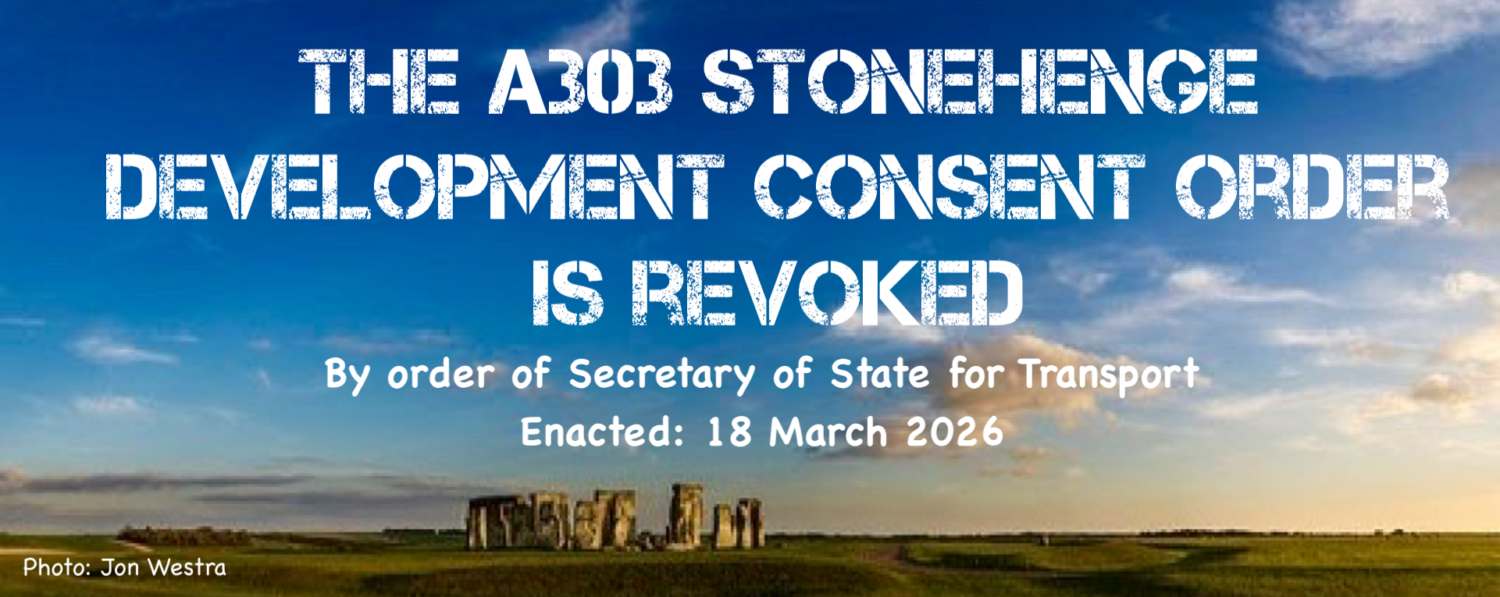
The Government’s scrapping of its damaging proposal to widen the A303 road across the iconic WHS is a triumph for common sense and our long campaign. BUT the road scheme was cancelled on grounds of affordability. What if it were to become affordable by a future government?
We are therefore progressing two legacy projects to protect the Stonehenge landscape:
⇒ FIRST: Raise the status of World Heritage Sites in the UK
Until the WHS is protected under UK planning law it is not secure from further damage. Statutory project will require parliamentary action, action that has been taken to some extent, but it needs to go much further in order to place World Heritage Sites in the UK on a statutory footing. READ MORE >
⇒ SECOND: Promote alternative investment to massive roadbuilding
The Transport Secretary, Heidi Alexander, has revoked the planning permission for the Stonehenge scheme. This opens up an opportunity for Wiltshire Council, the Highways Authority, to initiate an inclusive, informed, debate about addressing the traffic problems experienced by people living in and around the Stonehenge area. We summarise our thoughts in our item “Dealing with local traffic impacts: a better way forward” below.
The South West is something of a Cinderella when it comes to accessing the region by all modes. A recent study supported by us highlighted upgrading the inadequate railway track to the south west as a priority. READ MORE>
Dealing with local traffic impacts: a better way forward
Stonehenge could be a world leader in best practice in low carbon solutions and demand management for World Heritage Sites and other protected landscapes. Both these transport initiatives would cost a fraction of the budget saved from cancelling the Stonehenge Tunnel project.
We do not put ourselves forward as advocates of any specific intervention, although we do advocate sustainable transport measures that would be more fitting for the 21st century than gouging a concrete trench and tunnel through a prehistoric “landscape without parallel”.
We list examples of some measures below:
Installing heavy traffic management measures through local villages, monitored for impacts on local communities.
Trialling intelligent traffic light system between the two roundabouts between Longbarrow and Countess actively monitored for traffic flow.
Addressing the problem of ‘rubber necking’ near Stonehenge bottom by piloting low-speeds.
Laying ultra-quiet surfacing to reduce intrusive road noise.
Piloting innovative methods to discourage peak tourist travel times including a local road charging that could generate green travel funds for connecting shuttle buses.
Reviewing the road layout to avoid the constriction where two lanes merge.
Investing in rail access to the south west along the lines proposed by the south west peninsular task force.
Reclaiming an inclusive solution which enhances free public access and enjoyment of the monument on foot, by bicycle and local bus for all.